News

This section highlights various CLEAR activities. While an effort is made to note important events, research results and new tools, not everything CLEAR is involved in makes it to the News section. Past articles are provided to help gain a better understanding of the Center and its past endeavors.

  • 2009
  • 2008
  • 2007
  • 2006
  • 2005
  • 2004
  • 2001

12/09 - CT DEP and UConn Launch New Website with Digital Maps and Data on State’s Environment and Natural Resources
09/09 - CLEAR Debuts Forest Fragmentation Website
09/09 - A National Low Impact Development Atlas Online
09/09 - New training focuses on "Mashup" Technology
09/09 - CLEAR Associate Director Receives National Recognition
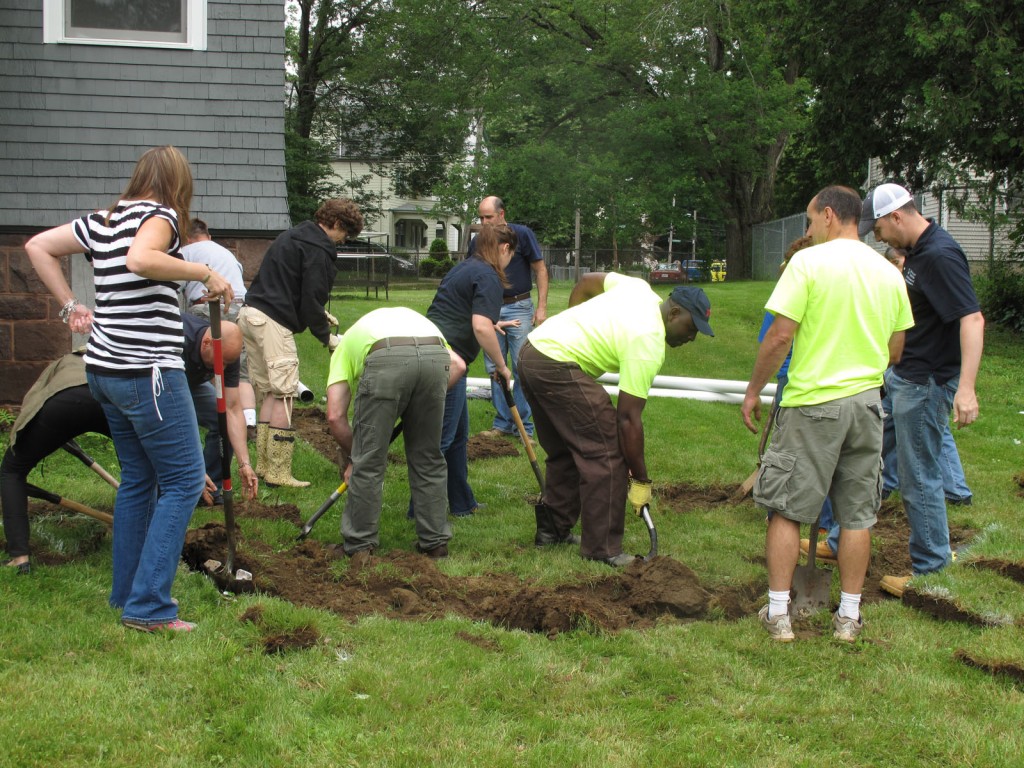
09/09 - Groundbreaking Water Protection Project Begins on UConn Campus
09/09 - CT ECO is on the Way
09/09 - A New Publication on Riparian Buffers
03/09 - Connecticut's Changing Landscape: Version 2
01/09 - New "About Buildouts" Booklet
01/09 - Connecticut Land Use Academy: Basic Training for Local Commissioners
01/09 - The National NEMO Network Wins National Award
01/09 - The CT NEMO Program Wins Award
01/09 - The Geospatial Training Program
01/09 - Graduate Student Studies Effect of Sea Level Rise on Coastal Marshes
01/09 - NEMO's Online Community Resource Inventory


12/09 - CT DEP and UConn Launch New Website with Digital Maps and Data on State’s Environment and Natural Resources

- CT DEP News Online

The Connecticut Department of Environmental Protection (DEP) and the University of Connecticut Center for Land Use Education and Research (CLEAR) today launched a new website, Connecticut Environmental Conditions Online (CT ECO) that includes the latest and most accessible online maps and tools for viewing Connecticut’s environmental and natural resource information.

The new CT ECO website, www.cteco.uconn.edu, includes environmental and natural resource information for Connecticut such as protected open space, farmland soils, wetland soils, aquifer protection areas, water quality classifications, and drainage basins. Each can be viewed separately or in conjunction with other environmental and natural resource information. In addition, CT ECO includes several sets of high resolution imagery.

more


Back to Top


09/09 - CLEAR Debuts Forest Fragmentation Website

The University of Connecticut Center for Land Use Education and Research (CLEAR) is pleased to announce that the results of our statewide forest fragmentation analysis are now up on the CLEAR website: clear.uconn.edu/projects/landscape/forestfrag. About 60% of the state is classified as “forested,” i.e., covered with trees (as determined by our Connecticut’s Changing Landscape project). However, tree cover alone is not a reliable indicator of the functional health of forested ecosystems, which are greatly impacted by proximity to non-forested areas. By applying CLEAR’s forest fragmentation model to our land cover data, we can get a feel for these issues. For instance, from 1985-2006, the amount of “core” forest decreased by about 264 square miles; this includes conversion both to non-forest, and to the other (impacted) forest classes. The analysis results are available as statewide, town level, and watershed level maps, data tables, and downloadable data. Take a look!

Back to Top


09/09 - A National Low Impact Development Atlas Online


CLEAR’s National NEMO Network has recently launched the Low Impact Development (LID) Atlas, a sophisticated website that is intended to show LID practices from around the country in a unique, interactive way. LID refers to a number of stormwater management practices, like grass swales, rain gardens, permeable pavements and green roofs that reduce runoff and help to protect water resources from the impacts of nonpoint source pollution. The new Atlas is a “mashup,” using Google Maps in combination with local data to create a searchable map that covers the entire country. The Atlas was developed by a partnership of the Connecticut and California NEMO programs, and is coordinated by the National NEMO Network “Hub” at CLEAR. The NEMO Network is now comprised of 32 programs in 30 states, all adapted after UConn’s original NEMO program. The most advanced feature of the Atlas is that all 32 NEMO programs and their partners can enter data, photos and links for LID practices in their own state, and have them immediately appear on the national site. Thus, the hope is that within a year’s time the national map will be festooned with the many-colored markers that mark the spot of an LID practice. “We’re hoping for at least 500 entries by the end of the year,” says Dave Dickson, NEMO Network coordinator. He adds that “this is an excellent example of the power of the Network to create unique educational products. Not many organizations could pull off something like this, and we did it with a minimal budget, just using the collective abilities of our network members.”

Back to Top


09/09 - New training focuses on "Mashup" Technology

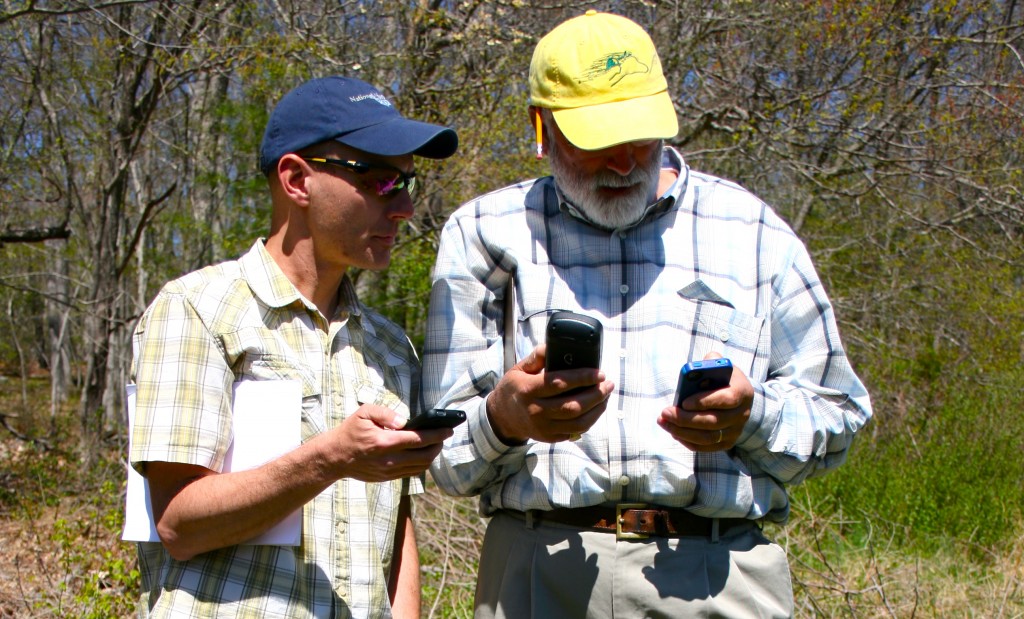
Chances are that you’re familiar with Google Earth and Google Maps. But did you know that these and other “earth browser” technologies can be used in combination with geospatial technologies to allow researchers, outreach professionals and others to share their data, maps and images over the web? This combination of techniques is commonly called a “mashup,” a term borrowed from the early days of hip-hop music when existing recordings and sound effects were “mashed” together to form a new creation. Mashup technology holds tremendous promise for broad-based dissemination of a wide variety of research and other information. Basically, any information with a geographic location can be displayed via an earth browser, including data, photos and links to websites and documents. A prominent example is the CT NEMO Low Impact Development (LID) Inventory, a searchable website that uses Google Maps to display information about LID sites across the state. A National LID Atlas, where any of the 32 NEMO programs around the country can create their own entries, just debuted this summer. Three CLEAR programs, the Geospatial Technology Program (GTP), the CT NEMO Program and the National NEMO Network, have collaborated to develop mashup training for colleagues in the state and the region. The prototype of the one-day workshop was tested in 2007 with colleagues from the National NEMO, USDA, NGTEN, Land Grant and NOAA Sea Grant networks, and has been fine-tuned in the intervening time. An advanced mashup class for Connecticut professionals was conducted in the spring by GTP, and a Northeast Region workshop for Land Grant and Sea Grant staff was held at the UConn Groton campus this past June. The workshop was a big success, and another is planned for Portsmouth, New Hampshire in October. “Mashup technology is relatively easy to learn, even if you’re not a GIS expert, and it’s so flexible that it can be used for a whole range of applications,” says Cary Chadwick, GTP’s principal mashup trainer. CLEAR hopes to obtain funding to continue these workshops, both instate, regionally and even nationally. For more information, contact Cary Chadwick at: cary.chadwick@uconn.edu.

Back to Top


09/09 - CLEAR Associate Director Receives National Recognition

The Association of Public Land Grant Universities (APLU) has selected CLEAR Associate Director Chet Arnold to receive the Excellence in Extension award in the Northeast Region. The award is presented annually to an individual who has strived throughout his/her career to achieve benchmarks reflective of excellence in extension educational programming. Chet is being recognized for his work in co-founding and running the CT NEMO program, the National NEMO Network and CLEAR. He is the first recipient of this award from UConn or even New England.

Back to Top


09/09 - Groundbreaking Water Protection Project Begins on UConn Campus


In July, CT NEMO began field work on a project to improve Eagleville Brook watershed, which is located in Mansfield and includes much of the UConn campus in its upper reaches. The project is in response to a “Total Maximum Daily Load” (TMDL) developed by CT DEP for Eagleville Brook. TMDL’s are part of the Clean Water Act, and are usually written using target levels of specific pollutants, like nitrogen or bacteria. In the case of Eagleville, which testing showed to have overall impairments due to stormwater runoff, CT DEP developed an impervious cover TMDL which targets reductions in the amount and impact of impervious surfaces in the watershed. It is the first of its kind in the entire nation, and many believe the wave of the future in water regulation for urbanized watersheds suffering from stormwater-generated maladies. Stay tuned….

Back to Top


09/09 - CT ECO is on the Way

A new, cutting-edge interactive mapping website will be unveiled soon that will allow Connecticut residents to access a wide array of digital information about their neighborhood, watershed or town. Connecticut Environmental Conditions Online, or CT ECO for short, is a partnership between CT DEP and CLEAR, funded in part by the Office of Responsible Growth of the CT Office of Policy and Management.

Back to Top


09/09 - A New Publication on Riparian Buffers

A new publication on riparian buffers is available from the CT NEMO and Sea Grant programs for coastal landowners. The pamphlet, “A Planting Guide for Riparian Sites along the Connecticut Coast,” describes Connecticut’s coastal habitats, the functions and importance of buffers to these habitats, and how to plant a buffer. A companion piece listing plants appropriate for a variety of coastal habitats will be available soon. For more information contact Juliana Barrett at juliana.barrett@uconn.edu.

Back to Top


03/09 - Connecticut's Changing Landscape: Version 2

The University of Connecticut Center for Land Use Education and Research (CLEAR) has just released the next version of its Connecticut’s Changing Landscape project, which now charts changes to the face of Connecticut over a 21-year period, from 1985 to 2006. During that period, the “footprint” of development-related land cover classes gained about 218 square miles, almost exactly matching losses to forest and agricultural fields (figure).

The project, which has become a much-used resource since 2002 for many communities and organizations, uses satellite-based remote sensing data to characterize land cover at certain points in time, and land cover changes over time. Version 2 updates the study to 2006, with data for each of the five study years (1985, 1990, 1995, 2002 and 2006) and landscape change over the entire 21-year period. Version 2 is also an enhancement: it now includes specific information on agricultural fields, which had previously been unavailable, as well as other improvements that improve the overall accuracy of the data.
 
CLEAR’s updated and enhanced Connecticut’s Changing Landscape website offers information from the study in a range of ways, from data tables to charts to maps to interactive web mapping—all at the state, regional and town levels. The site has been made even more visual and intuitive than the previous version; we are especially proud of the newly revamped Statewide Information and Your Watershed pages. Check it out at: http://clear.uconn.edu/projects/landscape/index.htm

Back to Top


01/09 - New "About Buildouts" Booklet

CLEAR’s NEMO Program has just released a booklet that goes over basic information about “buildout” analyses.A buildout analysis is a projection of how much development would occur in a community if it were to build on every available acre of land, given certain constraints. In recent years, buildouts have been much discussed as a tool to help inform local planning. But what exactly is entailed in doing a buildout? How accurate is it? What software (if any) and data do you need?A supplement to an existing NEMO workshop, this booklet goes over buildout basics, including the limitations, data needs and educational uses of this planning tool. The publication is based on a study conducted in 2006-2007 by CLEAR in collaboration with Central Naugatuck Valley Council of Governments, funded by Connecticut Office of Policy and Management. The study made comparisons of three different buildout analyses of varying degrees of sophistication, in the interest of exploring the implications for a statewide buildout study.

The booklet can be downloaded at: nemo.uconn.edu/tools/publications/ about_buildouts.pdf.

Back to Top


01/09 - Connecticut Land Use Academy: Basic Training for Local Commissioners

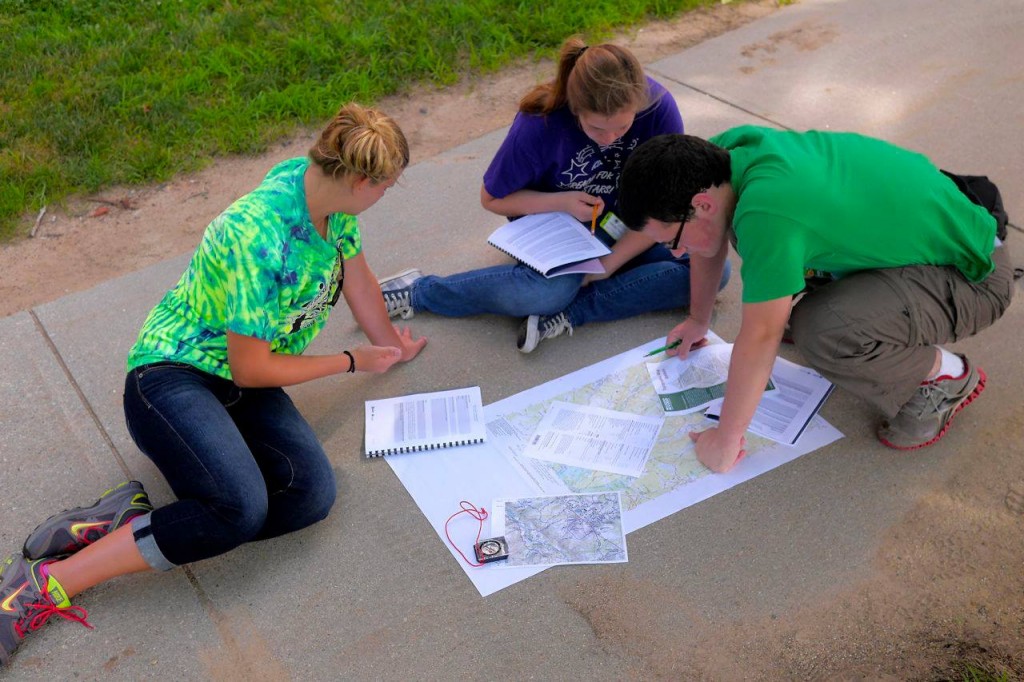
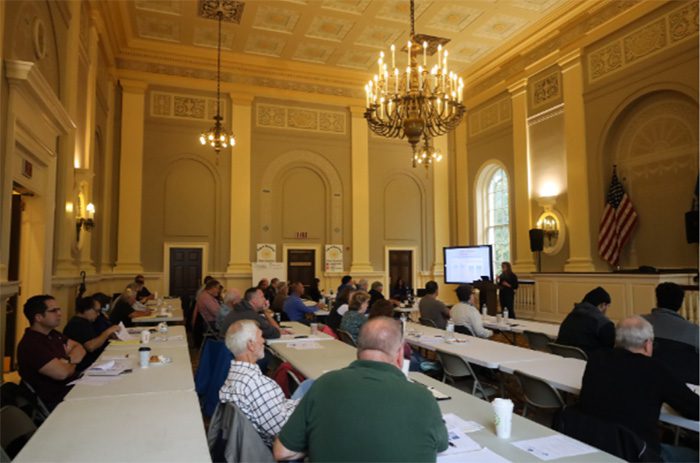
In 2008 the Connecticut Land Use Academy completed the first full calendar year of its new format, providing training for 300 land use commissioners from 120 towns across the state. The Academy, which is largely funded by the Office of Responsible Growth of the Connecticut Office of Policy and Management, provides “basic training” for new and continuing commissioners focusing on knowledge and skills that they need in their role as land use decision makers. The new format consists of four day-long training workshops in different locations of the state over the course of the year.Each workshop is comprised of three sessions: Roles and Responsibilities, Legal Requirements (taught by the Connecticut Bar Association), and Map Reading for Site Plan Review. It’s a lot to get through in one (long) Saturday, but for those hardy souls who make the commitment, it seems to be worth it! About 91 percent of post-training survey respondents were “satisfied” or “very satisfied.”

And who are these folks? Based also on the surveys, it appears that slightly over half of Academy attendees are Planning and/or Zoning commissioners. Inland Wetlands and Watercourse and/or Conservation commissioners were also well-represented, with Zoning Boards of Appeal and Economic Development commissions having less representation.

Despite the success of the basic Academy training, most people would agree that when it comes to education of local land use officials, more is needed. Of course, CLEAR outreach programs like Nonpoint Education for Municipal Officials (NEMO), Land Use Planning Program, Geospatial Training Program and Green Valley Institute cover a lot of ground, particularly when it comes to conducting workshops on all the aspects of natural resource-based planning. However, the Academy is also expanding its reach.

The first “Hot Topics in Land Use” conference, sponsored in partnership with the Connecticut Bar Association Planning and Zoning section and the Connecticut Chapter of the American Planning Association, was held in November of 2008. The conference included nine workshops on a wide variety of topics, including farmland preservation, affordable housing, village and historic districts, economic development, downtown revitalization and form-based zoning. The plan is for Hot Topics to be held every other year, alternating with the Land Use Law Conference sponsored by the Connecticut Bar.

Look for the 2009 Land Use Academy information, plus the new “Online Academy” section, on the website: clear.uconn.edu/lua.

Back to Top


01/09 - The National NEMO Network Wins National Award

The National NEMO Network, which now comprises 32 programs in 30 states, won the 2008 national award from USDA as the Outstanding Integrated Water Resources Program.

Back to Top


01/09 - The CT NEMO Program Wins Award

The CT NEMO Program won the 2008 Communications Award from the Connecticut Chapter of the American Plan Association for its set of three interrelated websites focused on Low Impact Development (LID). Visitors can get information from the CT DEP Stormwater Quality Manual, use Google Maps to visit and get information about LID emplacements around the state, or search for LID-friendly land use regulations currently in use in Connecticut towns. Visit NEMO’s low impact development websites at:nemo.uconn.edu/tools.htm.

Back to Top


01/09 - The Geospatial Training Program

The Geospatial Training Program has just released its 2009 schedule. In addition to the ever-popular Geographic Information Systems (GIS) and Global Positioning System (GPS) courses, the Program has added new courses on creating Google Maps “mash-ups” and using remote sensing and imagery in the context of your GIS. For more information visit: clear.uconn.edu/geospatial/training.htm.

Back to Top


01/09 - Graduate Student Studies Effect of Sea Level Rise on Coastal Marshes

CLEAR graduate student Mark Hoover is working on a study of inundation of key marsh habitats along Long Island Sound. The work, which is supported by a grant from The Nature Conservancy Connecticut Chapter, models the competing forces of sea level rise and marsh accretion, and makes predictions about the fate of the marshes along the coast.

Back to Top


01/09 - NEMO's Online Community Resource Inventory

NEMO’s Online Community Resource Inventory, which is used by about 1200 different people per month to access maps of their town, has now added coastal habitat data layers to its list of maps. Visit: nemo.uconn.edu/tools/cri.

Back to Top

08/08 - CLEAR Hosts CT 2000 LiDAR Data Set and Derived Products

Connecticut's 2000 LIDAR data set has been made available via the World-Wide-Web on the CLEAR web site at http://clear.uconn.edu/data/ct_lidar/index.htm. These data include the "raw" positions provided as ASCII text, the positions provided as in ESRI point cloud, ESRI triangulated irregular networks (TIN), and ESRI shapefiles of the contours. The data are subdivided into quarter-quarter quadrangles that align with the USGS 7.5' topographic map series boundaries, have SPCS83 0600 planimetric coordinates and orthometric heights referred to NAVD 88, all in US Survey feet. This project resulted in a poster presentation in May 2008 given by Mr. John L. David at the Second National Lidar Meeting in Reston, VA. A copy of this poster can be viewed on the CLEAR Publications page.


03/08 - CLEAR Director Dan Civco Receives National Award for Teaching

Use the link below to read more about Dan's prestigious award in UConn's Advance e-newsletter.

advance.uconn.edu/2007/071113/07111302.htm

10/07 - First CLEAR Progress Report is Published

CLEAR has released its first major progress report, detailing the Center’s activities for the first five years of its existence, 2002 – 2007. The report contains comprehensive lists of Center publications, partners, awards, and externally-funded grants. More important, however, are the pages that include brief descriptions of our landscape research, analytical tool development, technical training, and outreach education projects. You can request a paper copy of the report by emailing CLEAR Associate Director Chet Arnold, or download or view a copy on the CLEAR Publications page.


05/07 - CLEAR Creates Statewide Elevation Dataset

Investigators at CLEAR have created a statewide elevation dataset through the interpolation of airborne LiDAR data collected in 2000. These data are provided as gridded elevation on a USGS quadrangle basis. They have a spatial resolution of 10 feet and are projected into Connecticut State Plane, NAD83. This product emerged from a student projectstarted in Summer 2006 and continuing into Spring 2007, in which the students were modeling storm-related surge along Connecticut's shoreline. These elevation data are a research product and not intended for use in management, regulation, litigation, or related activities. They are intended for research, education, and demonstration purposes. More information on the data and the methods by which they were derived can be found in the metadata and a presentation developed by the student research team.


08/06 - CT NEMO Receives Outstanding Achievement Award

The CT NEMO Team has been awarded the 2006 Outstanding Achievement Award by the Renewable Natural Resources Foundation (RNRF) for their Putting Communities in Charge publication. As you probably know, this is the CT NEMO program’s first official compilation of some of the local actions that have been catalyzed by CT NEMO. The Report can be ordered online on the NEMO website's Publications section. The official press release is also attached for those who want to learn more.

08/05 - CLEAR and NEMO Featured in the UConn Traditions Magazine
04/05 - CLEAR Wins Environmental Leadership Award
01/05 - CT NEMO’s New Publication, Putting Communities in Charge
01/05 - Connecticut Stormwater Quality Manual Training
01/05 - CLEAR and NEMO Featured in the Earth Imaging Journal
01/05 - Geospatial Technology Program’s Training Classes


8/05 - CLEAR and NEMO Featured in the UConn Traditions Magazine

An article about CLEAR and NEMO was recently published in the UConn alumni magazine, UConn Traditions. The article focuses primarily on “Connecticut’s Changing Landscape,” the CLEAR project that is tracking statewide changes in land cover since 1985.

The article can be found at uconnmagazine.uconn.edu/smmr2005/smmr05f2.html.


4/05 - CLEAR Wins Environmental Leadership Award

The Center for Land Use Education and Research (CLEAR) was recently presented by the University Environmental Policy Advisory Council (EPAC) with a 2004-2005 ENVIRONMENTAL LEADERSHIP AWARD, in the category of University-affiliated Group. Winners were selected based on proven dedication and outstanding contributions to the principles of environmental leadership as outlined in UConn’s Environmental Policy Statement. The first-ever awards were presented to CLEAR Director Dan Civco and other CLEAR staff at a special ceremony on Earth Day, April 22, 2005.

Back to Top


1/05 - CT NEMO’s New Publication, Putting Communities in Charge

CT NEMO recently printed its first official impact report dedicated to the work of the NEMO Program in Connecticut. The report describes the origin, objectives and progress of the program and includes a number of exciting new initiatives that have begun during this past year.

The main body of the Report, however, is given over to portrayals of selected towns that have worked with NEMO, and the ways that these towns are taking charge of their community’s future development patterns. The report profiles Old Saybrook, Waterford, Woodstock, Salem, Central Naugatuck Valley, Watertown, East Haddam, Candlewood Lake Authority and Stonington. The examples detailed in the report, while they represent only a portion of the good work being done around the state, demonstrate the power of local citizens to bring about positive change in their communities.

To order a copy of the report, free of charge, visit the NEMO website's Publications section. The profiled areas (Old Saybrook, Waterford, Woodstock, Salem, Central Naugatuck Valley, Watertown, East Haddam, Candlewood Lake Authority and Stonington) are also available as individual .pdf files for easy online viewing.

Back to Top

1/05 - Connecticut Stormwater Quality Manual Training

The CT NEMO Program Team will be providing training around the state during 2005 on the new Stormwater Quality Manual by CT DEP. A number of key constituents will be targeted including municipal officials, town and consulting civil engineers, landscape architects, public works departments, state employees and others. View the manual at: http://dep.state.ct.us/wtr/stormwater/strmwtrman.htm


1/05 - NEMO Featured in the Earth Imaging Journal
November/December 2004 vol.1 no. 6

An article about CLEAR and NEMO was recently published in Earth Imaging Journal, a fairly new high-profile publication in the remote sensing world. EIJ is published by private sector remote sensing interests, and is not a peer-reviewed journal. However, their interest in our work (they solicited the article), and the fact that they put it on the cover of the hard copy journal, is a good sign indicating our growing national recognition. Interestingly, we assumed that they wanted to know all about our latest CLEAR research, but the Editor kept asking us for more about NEMO and the on-the-ground results of our work. Thus, there are nice breakout boxes on both CT and National NEMO. The e-article is at: http://www.eijournal.com/Local_Decisions.asp

Back to Top

1/05 - Geospatial Technology Program’s Training Classes

The Geospatial Technology Program recently conducted a 5-day, hands-on GIS training class at the UConn Storrs Campus. The class attracted professionals from regional planning organizations, conservation commissions and public utilities, and included town planners, assessors, college faculty and consultants.

Back by popular demand, a second class is currently being held at the Haddam Extension Center. The class is being taught using recently acquired lap top computers. GTP plans to use this “mobile class room” to host additional training classes at sites throughout the state in 2005, and beyond. GTP is in the process of redesigning and enhancing a hands-on, field-based GPS for GIS class. This class will be particularly suitable for lands trusts, conservation commissions and nonprofit organizations.

Back to Top


09/04 - Big Additions to Connecticut's Changing Landscape Website!
06/04 - Connecticut's Changing Landscape Project in the News
01/04 - CLEAR Launches New Connecticut Landscape Data


6/04 - NEMO Highlighted in the U.S. Commission on Ocean Policy's Preliminary Report

"Released by the U.S. Commission on Ocean Policy on April 20, 2004, this document presents the Commission’s preliminary findings and recommendations for a new, coordinated, and comprehensive national ocean policy. Mandated by the Oceans Act of 2000, the Preliminary Report is now available for review and comment by the nation’s Governors and interested stakeholders." NEMO is highlighted in Section V, chapter 14: Addressing Coastal Water Pollution, page 170.

Visit the U.S. Commission on Ocean Policy website. View full report.


9/04 – Big Additions to Connecticut's Changing Landscape Website!

Project Summary: For the past 2 years, the UConn Center for Land use Education And Research (CLEAR) has been working on a project to produce improved and directly comparable land cover data for the entire state of Connecticut, for the years 1985, 1990, 1995 and 2002. This data provides, for the first time, a full 17-year record of our changing landscape, with a special emphasis on the growth of developed land throughout the state.

Statewide Data: Get charts, tables and maps of statewide land cover and land cover change.

New! Your Town: Use a drop-down menu or clickable map to get statistics and maps for any town in Connecticut. See where your town ranks in terms of developed land or landscape change!

New! Your Watershed: Get land cover and change statistics and maps for any regional watershed in the state.

Interactive Map: Explore the maps online in an interactive environment. If you can use your internet browser, you can use this site.

More Data! Data Download: Download the actual GIS data in several formats (shapefile, grid or imagine) by town, region or watershed, for your own analyses and use with your local GIS projects.

More Information! What We’re Measuring: Learn about the remote sensing technology used for the project, and the story behind the numbers and maps.

Connecticut's Changing Landscape website

Back to Top


6/04 - Connecticut's Changing Landscape Project in the News

Connecticut's Changing Landscape project got a bit of press this past winter. Below are several articles, originally printed in The Hartford Courant.

March 22, 2004 - The Hartford Courant, Editorial
Maps Tell Sprawl Story (pdf 27KB)

March 21, 2004 - The Hartford Courant, Commentary by Chester Arnold
Sprawl: A Birds-eye View (pdf 27KB)

January 4, 2004 - The Hartford Courant, Article By Mike Swift
Satellite Pinpoints State's Sprawl
- New Computer Maps Show Loss Of Land In Every Town To Development Over Decades (pdf 33KB)• Or read the original electronic article posted on The Hartford Courant's ctnow.com website. Satellite Pinpoints State's Sprawl (you may need to sign up for a free e-subscription to access the article.)

Back to Top


01/04 - CLEAR Launches New Series of Land Cover Data for Connecticut

The University of Connecticut, College of Agriculture and Natural Resources

The Project Team
(from left) Sandy Prisloe, Director of the Geospatial Technology Program, Emily Wilson, Research Assistant, James Hurd, Remote Sensing Research Assistant, Dan Civco Director of CLEAR, (not pictured, Chet Arnold, Assistant Director of CLEAR)

The Center for Land use Education And Research (CLEAR) has just released a new series of four dates of land cover data (1985, 1990, 1995 and 2002) for the state of Connecticut. These data, prepared from medium resolution satellite imagery, provide for the first time a consistently defined and interpreted set of land cover data that will allow state, regional and local planners to evaluate and study landscape changes over a seventeen year period. The data will be valuable to many organizations and government agencies as the state increasingly begins to deal with issues concerning development, sprawl, traffic congestion, forest loss and other aspects of landscape change.

The land cover data were interpreted from Landsat satellite imagery. Sensors aboard the satellite detect radiation reflected from the earth’s surface and store these data as images. The images, which are made up of millions of squares with a ground resolution of 30 meters (~ 100 feet) on a side, are converted via computer programs and human expertise into land cover maps. Land cover, as its name implies, shows the "covering" of the landscape. This is to be distinguished from land use, which is what is permitted, practiced or intended for a given area. For example, an area of low-density rural residential land use, as permitted by local zoning, likely will appear as forest in a Landsat image – there are a lot more trees than houses. Similarly, downtown Hartford, which is classified mostly as a “Developed” land cover is a mixture of uses that include offices, restaurants, stores, apartments, roads, parking lots, etc. From the satellite image it’s not possible to determine what the land uses are but we can describe the area as being developed.

The land cover data include eleven consistently defined classes and include: developed areas, turf and grass, other grasses and agriculture, deciduous forest, coniferous forest, water, non-forested wetlands, forested wetlands, tidal wetlands, barren areas, and utility rights-of-way. In preparing the data, care was taken to insure the accuracy of land cover classifications from one time period to the next thereby making it possible to conduct change analyses.

The land cover maps and a number of interpreted products can be viewed on the CLEAR website and each of the four dates of data can be downloaded for use in geographic information systems. http://clear.uconn.edu/projects/landscape/index.htm

Back to Top


Article below appeared in the CANR Journal - Oct/Nov/Dec 2001 issue (Vol. 8, No. 4)
© 2001 University of Connecticut

12/01 - New Center Brings Together Land Use Programs
By Kim Colavito Markesich

A new center is being created in the College that will bring together existing land use programs and make way for new ones. The Center for Land Use Education and Research (CLEAR) creates an umbrella for these programs that will expand research, teaching, outreach, and student support.

CLEAR incorporates the philosophy of land grant, space grant, and sea grant college systems into what NASA has been calling an "earth grant college" approach. Although the term "earth grant" is not officially recognized, College faculty have taken the idea to heart.

CLEAR will focus on the impacts of land use on natural resources. "The intent of the Center is to bring together expertise, data, education, and technical tools to assist Connecticut communities in their land use planning," says Daniel Civco, CLEAR’s director.

The center assembles a talented crew with a record of success. In addition to Civco, a renowned expert on remote sensing and GIS, principals include Chet Arnold, CLEAR’s associate director and water quality educator; Jim Gibbons, land use planning educator; Sandy Prisloe, geospatial extension specialist; and Steve Broderick, state forester.

"We see the new center as an umbrella for our ongoing programs that have some key elements in common," says Arnold. "They’re all about land use and they all result in practical educational programs with information and tools for land use decision makers in the state."

"Just about every town in Connecticut is facing the challenge of how to balance the need to save their important natural resources and at the same time develop to help the tax base," adds Gibbons. He continues, "Extension’s role is to take research at the University out to the public, presenting it in a way that is understandable and meaningful so that it can make some change."

Several very successful programs will be a part of CLEAR:

  • The nationally recognized NEMO (Nonpoint Education for Municipal Officials) program addresses non-point source pollution, now in 22 states across the country. John Rozum is the national network coordinator, and Laurie Giannotti is Connecticut program coordinator.The Community Land Use Planning Program is an ongoing state-funded project.
  • The Green Valley Institute ensures that community and individual land use owners in northeastern Connecticut’s Quinebaug-Shetucket National Heritage Corridor have the knowledge necessary for future planning.
  • The new Earth Grant Geospatial Technology Extension Program provides geospatial education and training to help local officials understand and benefit from remote sensing, GIS and GPS. Connecticut was the fourth state selected by NASA to place a geospatial specialist The three states to pilot this program were Utah, Mississippi,and Arizona.
  • The NAUTILUS (Northeast Applications of Useable Technology In Land planning for Urban Sprawl) program focuses on research methods for detecting land use change and developing quantifiable measurements to characterize urban growth, specifically how land use change causes forest fragmentation.
  • The genesis of the remote sensing and GIS research program dates back to 1990, when Civco founded LERIS, the Laboratory for Earth Resources Information System. In 1997, LERIS was officially recognized as a NASA Center for Excellence of Earth Observation. Currently, LERIS-related projects support four full-time research assistants and eight to ten graduate students.

One focus for the past few years has been on developing methods that characterize impervious surfaces, an important indicator of the impacts of development on waterways. Other research tracks involve measuring change in the Connecticut landscape over the past 30 years, with particular attention to the growth of urban land at the expense of forest and farmland. High-resolution satellite information is a major part of this new research. "We actually have satellites that rival the quality of those used by the intelligence community," notes Civco. With these new cutting-edge data as a foundation, CLEAR hopes to expand and enhance its many educational programs for Connecticut communities and land managers.

Current annual funding for existing CLEAR-related programs totals over $600,000, from a variety of sources including the Connecticut Department of Environmental Protection, Connecticut Sea Grant, the Quinebaug-Shetucket National Heritage Corridor, USDA, CSREES, the U.S. Environmental Protection Agency, NOAA, and NASA.

With the establishment of CLEAR, researchers and educators at the University will be able to create a truly integrated research, education, applications, and outreach facility that makes meaningful contributions to our understanding of, and ability to address, the impacts of land use practices and change on natural resources.

Back to Top